

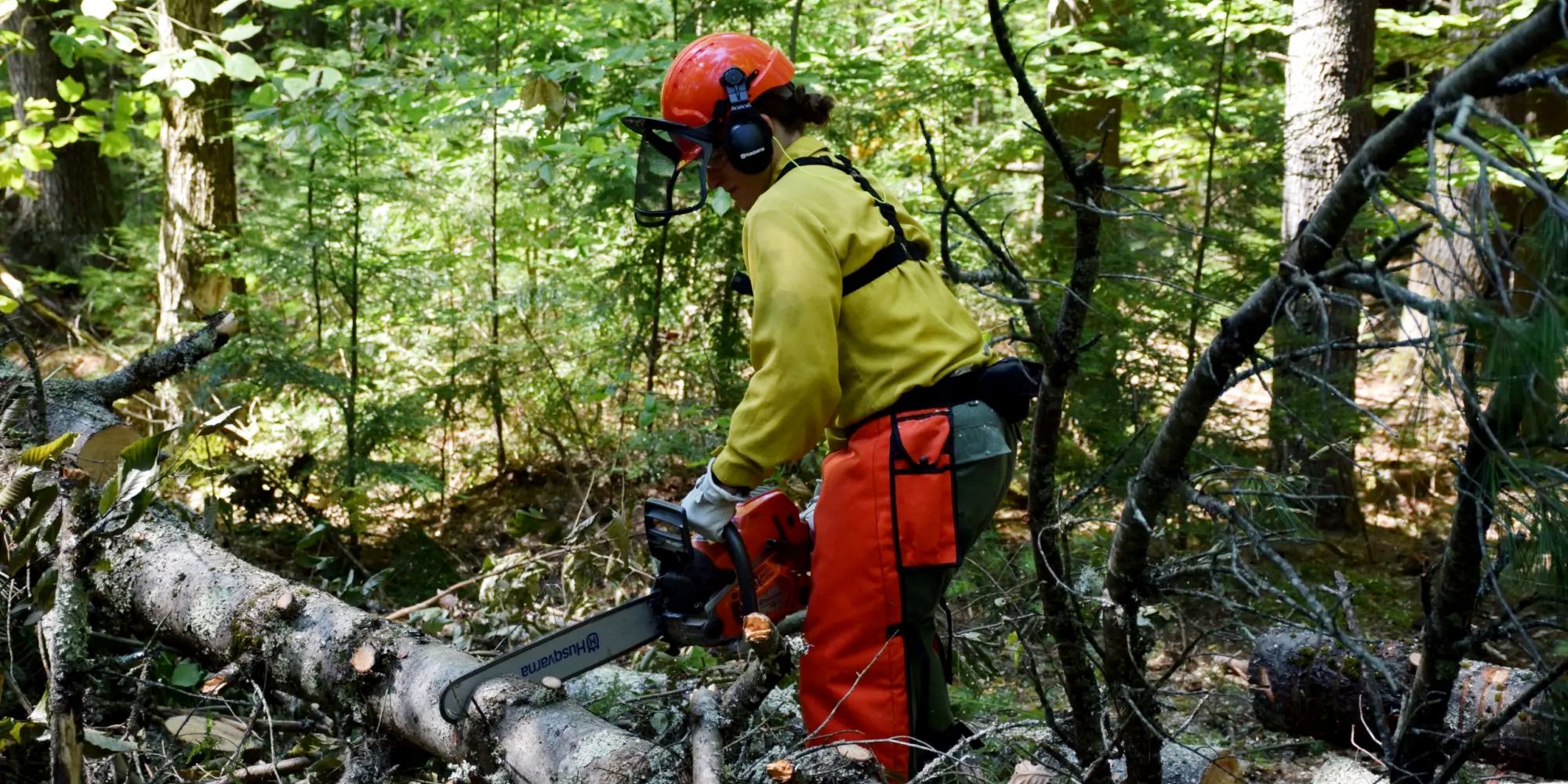
COMMENTARY: Chainsawing in wilderness? National Wilderness Act violated
By Dave Gibson
As an advocate for the “forever wild” Forest Preserve, Adirondack Wild: Friends of the Forest Preserve periodically reviews NYS DEC work plans to ensure that activities such as trail maintenance on the public’s Forest Preserve are undertaken in compliance with Article XIV of the state constitution, the Adirondack Park State Land Master Plan and DEC regulations.
These work plans are regularly posted at the department’s website, and have become more transparent, conservative in terms of tree cutting or alteration of the preserve’s environment, and descriptive about trail work involved since 2021. That is the year of the NYS Court of Appeals ruling that the department was violating Article XIV by authorizing the construction of wider, flatter, straighter and faster snowmobile trails on Wild Forest (in the legal case of Protect v. DEC and APA) .
Since that important ruling, the department has more carefully followed legal guidelines of the Adirondack Park State Land Master Plan. That plan states that in the park’s wilderness, primitive and canoe areas, the use of motorized equipment to conduct trail work, such as use of chainsaws, is generally prohibited to ensure that the wilderness definition is honored and guidelines for management and use observed. The primary wilderness guideline, with the force of law behind it, is “to achieve and perpetuate a natural plant and animal community where human influence is not apparent.”
Obviously, human influence could hardly be more evident than when chainsawing of trees across a trail. Therefore, ordinary use of chainsaws in wilderness is prohibited except in sudden, actual and ongoing emergencies caused, for example, by a significant blow-down of trees—such as what occurred in June 2024. In the aftermath of that severe windstorm, the DEC commissioner, with the support of the Adirondack Park Agency, authorized use of chainsaws to clear severely damaged sections of the Northville-Placid trail in the West Canada Lakes Wilderness.
In non-emergency circumstances, and only with the review and approval of the DEC commissioner and the APA, chainsawing on wilderness trails may only be conducted if justified, alternatives considered and during so-called “off-peak seasons,” meaning the fall and winter.
We raise these Adirondack and Catskill Park Wilderness guidelines today because at a national level, the U.S. Forest Service has just seriously loosened existing restrictions on the use of chainsaws in federal wilderness areas—without allowing any public comment.
The National Wilderness Preservation Act of 1964 was inspired by our own Article XIV of the NYS Constitution. Howard Zahniser, the author and lead advocate for the National Wilderness Act, was schooled in wilderness history and values by his friend, Adirondack advocate, and Friends of the Forest Preserve founder, Paul Schaefer.
The Wilderness Act, like our State Land Master Plan, restricts use of chainsaws and other mechanized equipment. When our national land management agencies flagrantly compromise the nation’s wilderness areas, that could lead in the future to compromising of wilderness values and regulations here at home, even in our Adirondack and Catskill Forest Preserve. That’s only one important reason why we should care about what is happening to wilderness at a national level.
Quoting from their website, this is what the organization Wilderness Watch, based in Missoula, Montana, has to say about the latest federal action:
“In May, the U.S. Forest Service authorized the use of gas-powered chainsaws by commercial outfitters and guides for seven months a year for up to three years on 542 miles of trail in about half of the River of No Return Wilderness.
The Forest Service made this decision after a year of secret, behind-closed-door negotiations with the Idaho Outfitter and Guides Association with no opportunities for public comment, no environmental review and no regard for federal laws, including the Wilderness Act.
We absolutely do not believe this authorization is legal under the Wilderness Act or the National Environmental Policy Act.
Not only does this move go against the mandate of the Wilderness Act prohibiting the use of motorized equipment in designated wilderness areas, it could also set a dangerous precedent for the management of wilderness across the country.”